Reflections from Portsmouth Guildhall's Work Experience Programmes
“And the future is certain
Give us time to work it out”
Road to Nowhere, Talking Heads
Can I make a confession? As someone who has managed work experience programmes for Arts Organisations over the best part of 3 decades now, I have often fought the notion that Year 10 was the right time for young people to do Work Experience.
Sure, I could see that most teenagers had given some thought to their careers by fifteen. But, in my experience, it would be an unusually self-possessed young person who would be both clear about their plans and why a particular work experience would be good for them.
I am happy to recognise that in other cultures, and at other times, this would be seen as a pessimistic view. But if you can take it from me – and accept my observations are rooted in a 21st Century Southern English Cultural outlook – then the following may allow for something a bit more encouraging.
Clearly Schools have (rigorously tested) good reason for putting Work Experience into the Year 10 timetable! For many fifteen-year-olds, with their GCSEs on the horizon, it is a moment which is meant to anticipate and cultivate a growing maturity. And yet it would be a brave work experience co-ordinator that would let loose Year 10s into organisations as if they were junior members of staff.
Gradually my observations have coalesced into a theory of change: the opportunity for Year 10s to enter a professional world needs to accompany conditions for them to explore that world – and crucially – without yet them having to decide whether they belong there.
For the past two years, rather than taking students across several weeks throughout the year, and then in each case dispersing them across the organisation, we decided to bring a larger number of students together at once in a single cohort.
This group then spent a week at Portsmouth Guildhall, where rather than ‘work shadowing’ departments in ones and twos, colleagues from departments came to visit the young people at our Youth Arts Space – The Base – and got the young people to work collaboratively on a series of creative tasks set by staff.
Now obviously “cohort work experience” has been done many times before, and I have programmed them myself at other organisations before. The difference this time was a growing intention to lean into the group dynamic.
What does that mean?
Every workplace has its own language, rhythms and assumptions. Adults navigate these without noticing. Young people exposed for the first time to such contexts – encounter them all at once.
The most valuable thing work experience can offer a young person is the opportunity to spend time around professionals: to see how they think, how they work, what they care about and how their individual roles contribute to something larger than themselves.
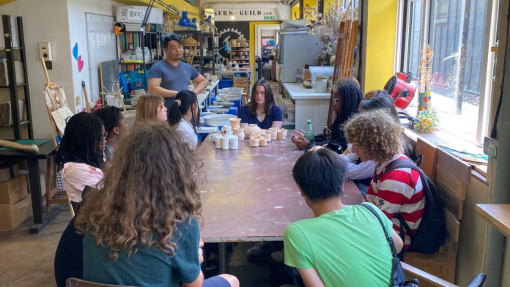
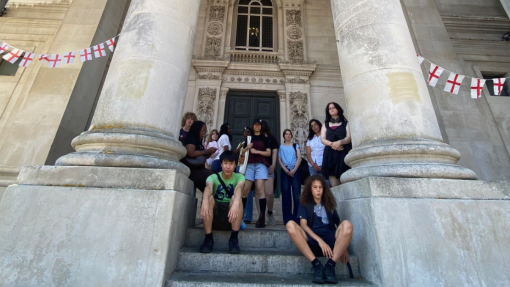
Figure 1: Spending time with professionals – here meeting colleagues at The Maker’s Guild.
But not all time spent with professionals is processed by young people in the same way.
Sal Khan has described something analogous in his appeal to “flip the classroom”, recognising that much classroom time is spent transmitting information that might not be received, leaving too little time for dialogue, questions and supported problem-solving. Something similar happens in a work shadowing context; students become aware, and anxious, they are taking up the professional’s time.
This is where having a peer group, matters. There’s confidence in numbers. Young people compare observations, test ideas, ask one another questions and gain confidence from each other to contribute. Conversations continue between formal sessions, over lunch or, in our case, while making music together. Understanding develops collectively and richly, rather than individually. This also then supports a higher level of engagement with the professionals.
As I reflect on this model for the second year, I could see the specific qualities we have in our cohort experience were beginning to overturn a persistent disappointment of work shadowing style placements; namely student isolation and boredom.
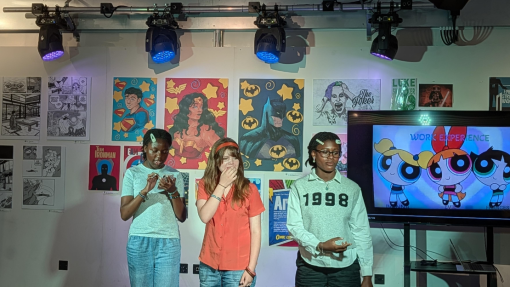
Figure 2: Participants worked together on presentations which could take whatever shape they wanted, in the BASE Guildhall.
Or as one participant said:
“The best part of this week for me were the opportunities for group work, the time for experimentation and the experience and knowledge I gained from sessions. I also loved being able to go through this week with my friends and getting to work in the band.”
The BASE – Guildhall’s subterranean youth arts space – also played an essential role, although not only because of its facilities. It provided a place where young people felt like they belonged before they were expected to contribute. Throughout the week participants returned to this youth/professional environment; relaxed, creative and their own. Not to mention that during one of the hottest weeks of the summer, it offered somewhere cool to think, collaborate and pause before the next activity. Or in the words of participant – “Being in the BASE – I like this place, it really meets the criteria of being a place for young people.”
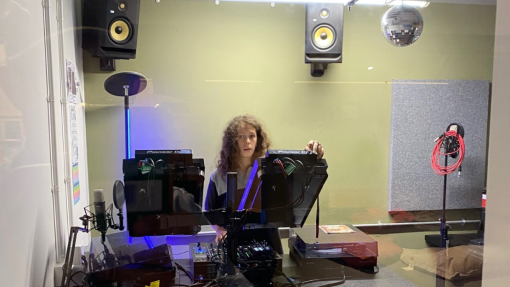
Figure 3: on the Decks during lunch break.
With these two mutually supportive elements, the group and the space, the third relational change could play out; the different relationship with colleagues across the organisation.
Rather than asking members of staff to supervise a student throughout the week, we invite them to do what they already do exceptionally well. Programmers explain how seasons are built. Technicians demonstrate production systems. Finance colleagues talk about budgets and responsibility. Front of House teams describe the practical realities of welcoming thousands of visitors. Marketing colleagues explain how audiences discover events.
They contribute their expertise, answer questions and set authentic challenges before returning to their own work. Crucially, colleagues weren’t being asked to become teachers or pastoral supervisors; they remain professionals. Young people meet adults speaking naturally and enthusiastically about work that matters to them. In turn, the organisation demonstrates that every department contributes to the life of the Guildhall.
“Meeting everyone – everyone was so kind and made me feel comfortable.” Participant Evaluation
The cohort model has another advantage. Historically considerable effort has gone into matching young people to the “right” organisation or the “right” profession. Whilst these deliberations clearly matter at some point in a young person’s development, I am less convinced that this is a set of concerns that most 15-year-olds are ready for. As soon as they walk through the door of any organisation, their most immediate concern is: can I understand what I am seeing? Do I know what is being asked of me?
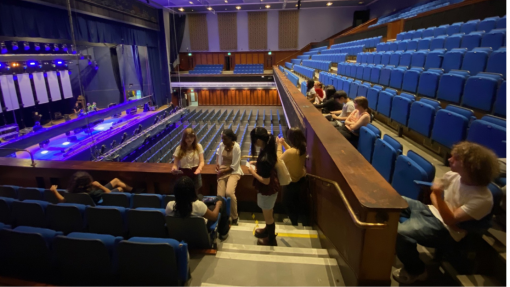
Figure 4: Throughout the week participants toured the building, here witnessing the rigging of lights.
Throughout the week participants toured the building, met colleagues from across the organisation, experimented with music production, explored technical spaces, developed creative projects and presented their work to one another on the final afternoon. Their evaluations reflected those experiences.
“I enjoyed seeing different types of employees at the Guildhall give us talks about their jobs each day. This gave me further insight into what the Guildhall is like to work in daily and what each unique job here is like.” Participant Evaluation.
Year 10 work experience should afford its 15 years olds something different. A first trusted encounter with the world of work – feels like a great place to start. A supportive moment to take it all in; whilst there is still time for curiosity, uncertainty and surprise!
If these things happen, then young people will have been given something that might stay with them long after other educational experiences diminish. Perhaps that is what we need more of to make work experience work.
“I will definitely remember this experience.” Participant Feedback, July 2026.
By Rupert Rowbotham
Arts Development & Partnerships Co-ordinator
The Portsmouth Guildhall Trust